Explore the latest trends, market data, and export insights for Indian spice shipments to the U.S. This guide highlights trade opportunities, key exporting countries, and essential HS code information to help businesses make informed export decisions.
Introduction
The demand for Indian spices in the United States has grown rapidly over the past few years, driven by the increasing popularity of ethnic cuisines, health awareness, and the natural food movement. With global exports of spices crossing billions in value, the U.S. stands as one of the top destinations for Indian spice shipments. This blog will walk you through essential trade trends, HS codes, and tools you need to start exporting Indian spices to the U.S. confidently.
What are Indian Spices?
Indian spices are dried seeds, roots, bark, or other plant substances used for flavoring, coloring, or preserving food. Popular spices include turmeric, cumin, coriander, cardamom, and chili. These spices are known not just for their taste but also for their medicinal and health benefits.
In the United States, Indian spices are widely used in home kitchens, restaurants, and food manufacturing industries. Their benefits range from digestive health to anti-inflammatory properties, making them highly desirable in health-conscious markets.
- Used in traditional and modern recipes globally
- High demand in natural/organic food sectors
- Known for rich aroma, flavor, and health benefits
Key Market Trends in the U.S.
| Market Driver | Description |
|---|---|
| Health Awareness | Rising demand for organic and natural spices |
| Ethnic Food Culture | Growth in Indian and Asian cuisine market |
| Retail Packaging | Demand for ready-to-use spice blends |
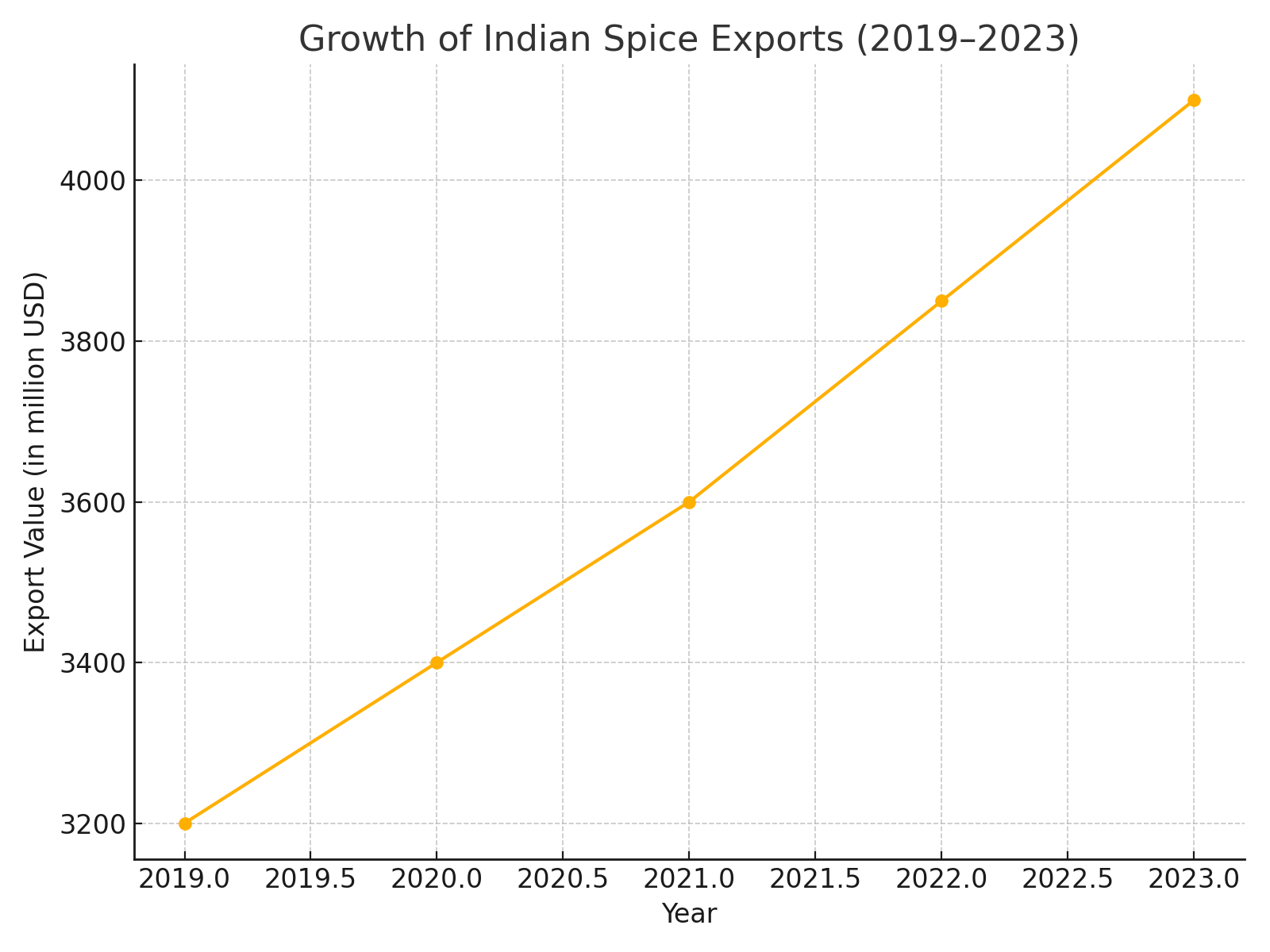
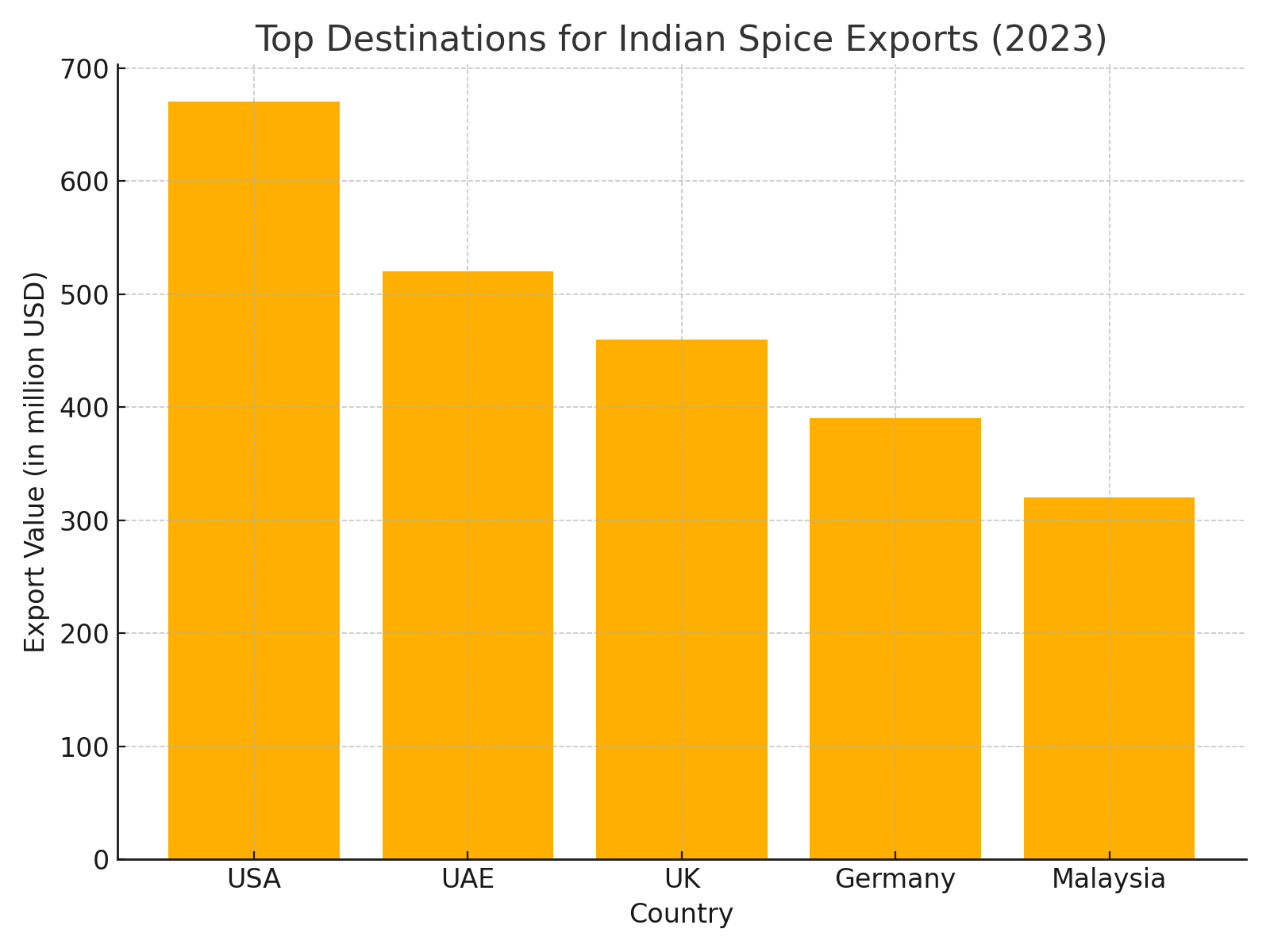
The U.S. imported over $500 million worth of spices from India in the past fiscal year. The demand for turmeric alone has increased by 15% year-over-year due to its immunity-boosting reputation.
According to TradeMap.org, global spice consumption continues to grow across North America, driven by clean-label products, organic food movements, and rising culinary diversity.
Top Exporting Countries
| Country | Export Share (%) |
| India | 32% |
| China | 18% |
| Vietnam | 15% |
| Indonesia | 10% |
| Sri Lanka | 7% |
India leads the spice export market globally, thanks to its wide variety, rich cultivation heritage, and favorable climate. However, countries like Vietnam and Indonesia are catching up by boosting production and offering lower prices.
Opportunities for Exporters
- Premium pricing with certifications like USDA Organic or Fairtrade
- Entry into health/gourmet/organic product segments
- Traceability and clean-label demand across U.S. retailers
- Potential in value-added segments like spice blends and extracts
HS Code for Indian Spices
Here are some commonly used HS Codes for exporting Indian spices:
- 0904.20.10 – Crushed or ground chili pepper
- 0910.30.10 – Turmeric (Curcuma)
- 0909.21.00 – Coriander seeds
- 0908.31.00 – Cardamom (seeds)
Ensure you classify your product accurately to avoid customs delays or extra charges. You can always contact us for HS code assistance and examples based on live trade data.
How Exim Data Hub Helps Exporters
| Feature | Exporter Benefit |
| HS Code Intelligence | Accurate classification and compliance support |
| Buyer/Seller Insights | Verified U.S. importers for various spices |
| Forecast Reports | Understand trends to plan pricing and volume |
Whether you’re just starting out or scaling your spice export operations, Exim Data Hub gives you everything you need—from predictive demand tools to verified buyer contacts and customized HS Code suggestions.
Conclusion
Spices from India continue to be a stronghold in the U.S. import market. With rising health trends and culinary diversity, exporters have more opportunity than ever. By understanding market trends, using the right HS Codes, and leveraging tools like Exim Data Hub, you can simplify your export journey and expand faster.
- Stay updated on buyer trends and seasonal exports
- Use verified HS codes for smoother customs clearance
- Tap into tools like Exim Data Hub to reach the right buyers
Want to export smarter? Use Exim Data Hub to stay ahead in global trade.
Frequently Asked Questions (FAQ)
Q1: Is certification required for exporting spices to the U.S.?
Yes. Most importers prefer USDA Organic or FDA-compliant certifications depending on the product.
Q2: How large is the current market for Indian spices in the U.S.?
The market crossed $1.5 billion in 2023, with India contributing over 30% of total spice imports.
Q3: How can Exim Data Hub help me with compliance?
We offer verified HS Codes, documentation guides, and regulatory updates in one place.
Q4: Can I get contact details of U.S. buyers for turmeric or cardamom?
Yes. Contact us for access to our verified buyer network.