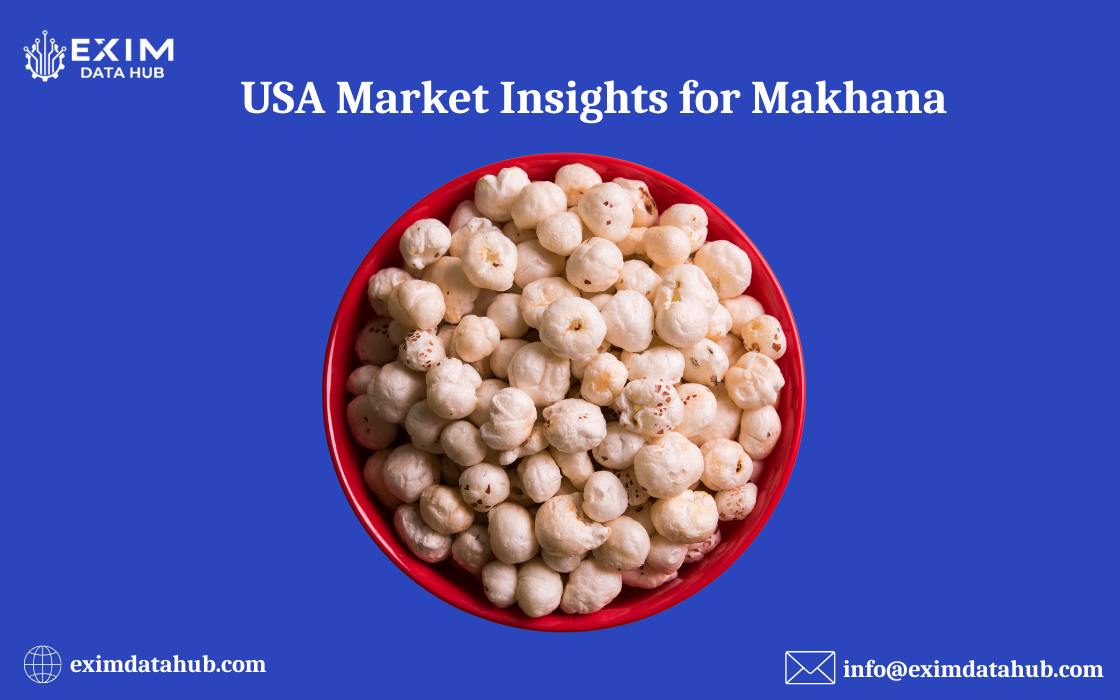
Explore the latest trends, market data, and export insights for makhana shipments to the USA. This guide highlights trade opportunities, top exporting countries, and essential HS code information to help you make smart export decisions.
Introduction
Makhana, also known as fox nuts or lotus seeds, is quickly gaining popularity in health-conscious American households. With rising interest in plant-based, gluten-free snacks, the demand for makhana in the U.S. has seen strong year-on-year growth.
India, as the largest producer, is well-placed to take advantage of this export opportunity. If you’re planning to enter the international food market, makhana can be a great starting point. This guide will walk you through the process, trends, and regulations you need to understand.
What is Makhana?
Makhana is the seed of the lotus flower, harvested mainly in Bihar and parts of eastern India. The seeds are popped after roasting and used as a healthy, low-calorie snack.
Popular in the USA for its crunch and nutrition, makhana is often sold in roasted, flavored, or raw forms. It’s rich in protein, iron, calcium, and antioxidants—making it ideal for diabetic, gluten-intolerant, or fitness-focused customers.
Because of its increasing presence in vegan snack mixes and fitness food packs, many U.S. retailers have started importing makhana under the FDA’s guidelines for edible seeds, which require clear labeling, allergen declarations, and packaging compliance.
Key Market Trends in the USA
| Market Driver | Description |
|---|---|
| Rise of healthy snacking | Consumers are avoiding chips and shifting to clean snacks |
| Growth in plant-based diets | Makhana fits well in vegan and low-carb food trends |
| Superfoods gaining spotlight | Makhana is entering the superfood category alongside chia and quinoa |
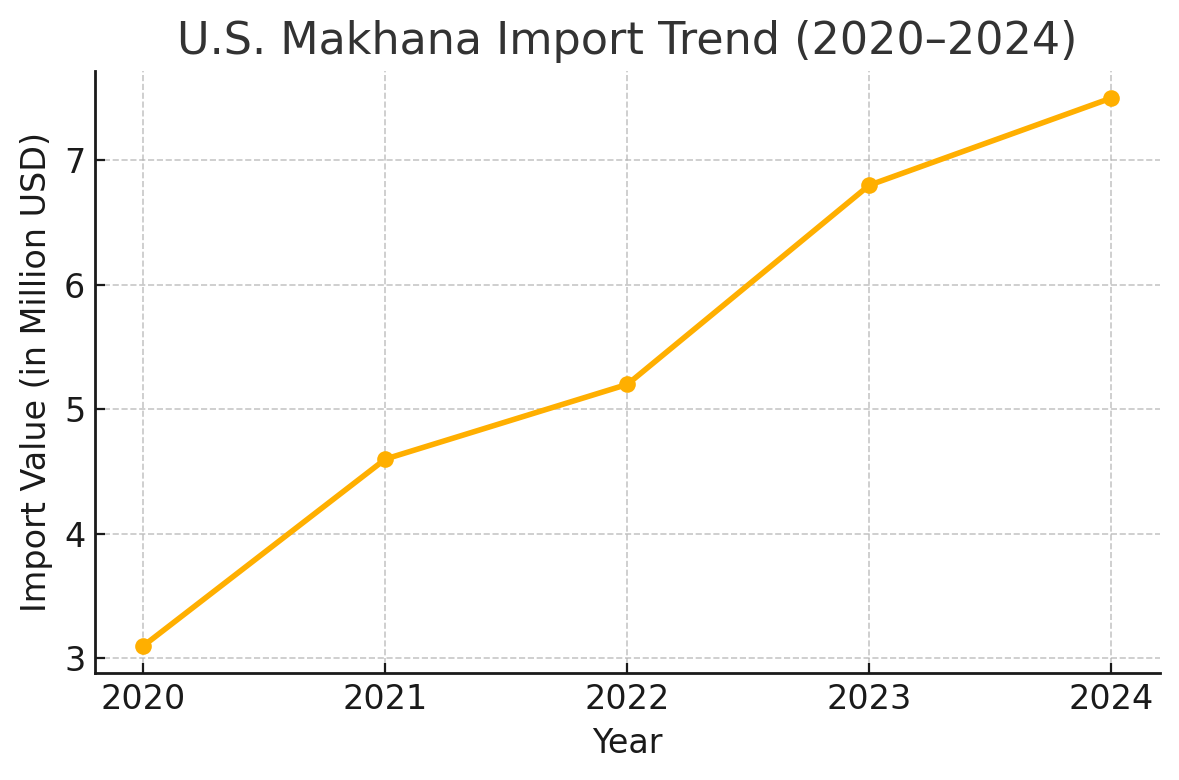
Between 2020 and 2024, makhana imports to the USA grew from $3.1 million to $7.5 million. According to analysts, this growth is partly fueled by awareness campaigns and clean-eating habits promoted by health platforms in the U.S. Additionally, regulatory clarity from agencies like the U.S. FDA around snack labeling and packaging has helped boost importer confidence and smoothen customs clearance.
The market is not yet saturated, which means exporters from India still have room to position themselves as reliable suppliers, especially when backed by proper documentation and certifications.
Top Exporting Countries
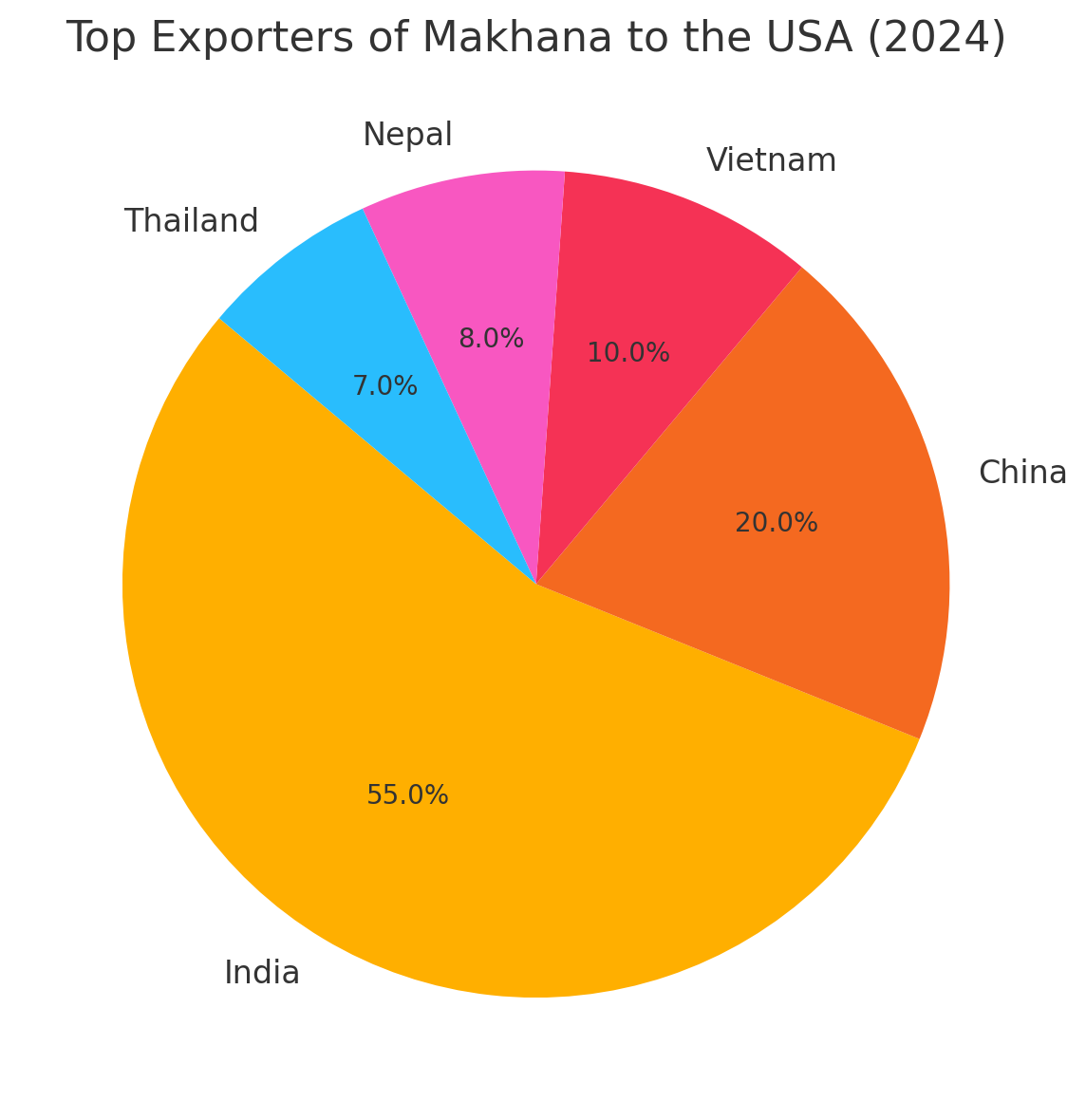
India leads due to quality, scale, and the fact that it is traditionally associated with makhana cultivation. However, China and Vietnam are closing in by offering faster lead times and bulk pricing, though often at the cost of quality.
Opportunities
The U.S. market offers several attractive opportunities for makhana exporters:
Growing interest in Ayurveda and Indian-origin superfoods
Rising demand from health snack startups and niche retail chains
Premium pricing in organic and gourmet stores
Export incentives under India’s Agri Export Policy
To capitalize, exporters should focus on certifications like USDA Organic and ensure packaging complies with FDA snack import regulations.
Additionally, if you’re a first-time exporter or need help identifying buyers, you can connect with the Exim Data Hub team for insights and trade support.
HS Code for Makhana
Choosing the correct HS code avoids delays and ensures smooth customs clearance. Below are common codes for makhana:
08134010 – Dried lotus seeds
11063090 – Flour or meal of dried lotus seeds
20089990 – Other edible seed-based snacks
08135000 – Mixed dried fruits/nuts (if included in trail mix packs)
Always verify the final code based on whether your shipment is raw, roasted, or blended.
How Exim Data Hub Helps Exporters
| Feature | Exporter Benefit |
|---|---|
| HS Code Intelligence | Helps you classify makhana correctly across markets |
| Buyer/Seller Insights | Access real-time U.S. importer and distributor data |
| Forecast Reports | Understand pricing cycles and plan your exports |
Using tools from Exim Data Hub, exporters can identify trusted buyers, check seasonal demand shifts, and prepare documentation with confidence.
Conclusion
Exporting makhana from India to the USA is a timely opportunity for new and experienced exporters alike. With increasing demand in the health, organic, and vegan food sectors, Indian exporters can lead the market if they follow the right process.
To succeed:
Get the HS code right
Understand buyer needs
Stay updated with U.S. food import laws
With the right support, especially from platforms like Exim Data Hub, you can tap into this growing market and expand your export business effectively.
Frequently Asked Questions (FAQ)
Q1: Is certification required for exporting makhana to the USA?
Yes, certifications like USDA Organic, HACCP, and FDA-approved packaging are often expected by importers.
Q2: How large is the current market for makhana in the U.S.?
Imports crossed $7.5 million in 2024, with demand growing year by year.
Q3: Do flavored makhana products require special approval?
Yes, flavored variants must meet U.S. flavoring and labeling guidelines under FDA norms.