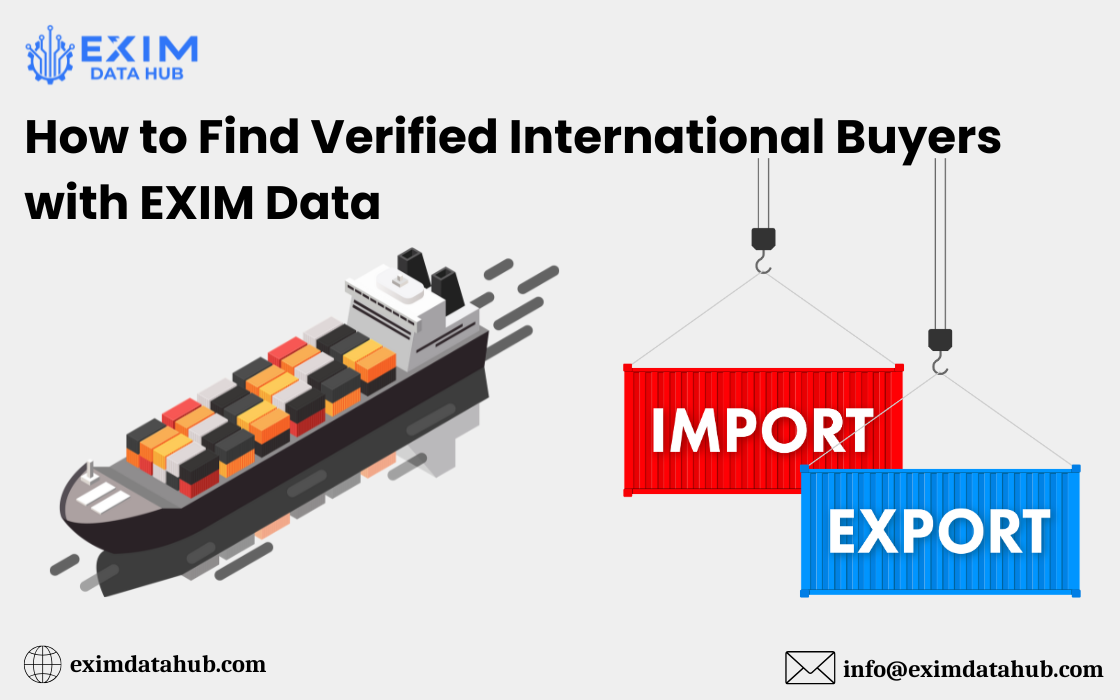
Découvrez comment les exportateurs avisés utilisent les données commerciales EXIM pour identifier de nouveaux acheteurs internationaux. Ce guide vous présente les vraies techniques pour développer vos exportations grâce à des analyses vérifiées.
Introduction
Trouver des acheteurs internationaux sérieux est souvent le plus grand obstacle au succès à l'exportation. Les méthodes traditionnelles comme les salons, annuaires ou la prospection à froid mènent rarement à des contrats réguliers. En 2025, la donne a changé. Les exportateurs se tournent vers les données EXIM pour trouver des acheteurs actifs en temps réel.
En analysant les flux commerciaux mondiaux — qui importe quoi, d'où et à quelle fréquence — vous pouvez identifier des acheteurs vérifiés, adapter votre argumentaire et réduire les efforts inutiles. Ce guide vous aide à faire exactement cela.
Que sont les données EXIM ?
Les données EXIM (export-import) fournissent des informations détaillées sur les mouvements de marchandises entre pays. Elles aident les exportateurs à comprendre les dynamiques commerciales, les tendances de demande et les acheteurs potentiels.
- Registres d'expéditions par produit et valeur
- Codes HS (classification des produits)
- Volumes et pays d'exportation/importation
- Noms d'acheteurs et de vendeurs actifs
En utilisant des plateformes comme Exim Data Hub, les exportateurs peuvent filtrer ces données pour découvrir des importateurs en temps réel selon le produit, la région et la valeur.
Tendances clés dans la découverte d'acheteurs
Les données commerciales révèlent une forte demande dans plusieurs secteurs, notamment l'alimentation, les biens industriels et les produits écologiques.
- Les pays occidentaux augmentent leurs importations de produits certifiés et traçables
- Les petits importateurs d'Afrique et d'Asie du Sud-Est progressent rapidement
- De nombreux acheteurs de taille moyenne remplacent leurs anciennes relations fournisseurs
Voici deux visuels utiles :
Principaux pays importateurs (2024)
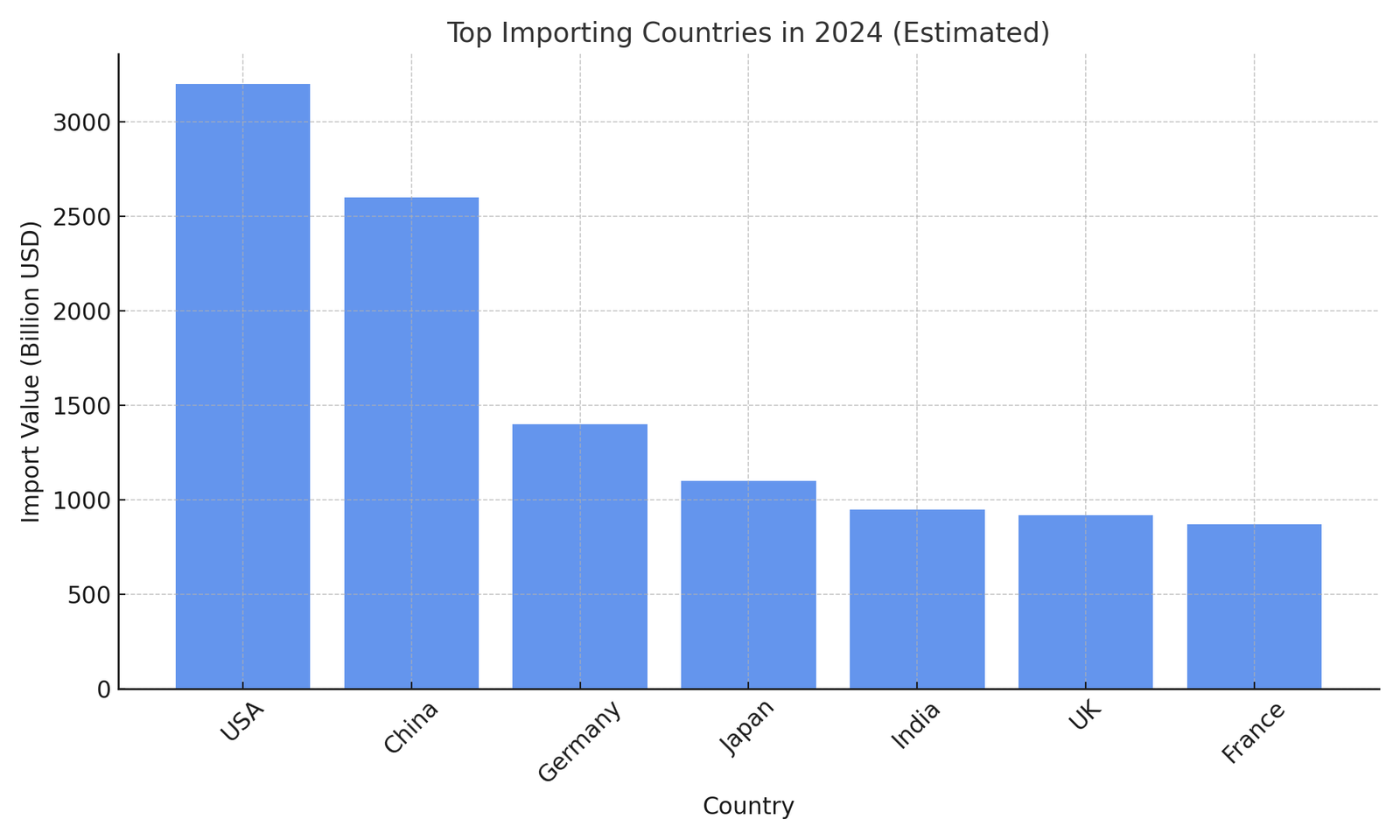
Des pays comme les USA, Allemagne, et Inde continuent de dominer les importations mondiales, mais des régions comme l' Japon et Pays-Bas connaissent une croissance plus rapide dans les catégories de niche.
Comment analyser le comportement des acheteurs
Il ne suffit pas de voir qui a acheté quelque chose. Vous devez savoir comment ils achètent.
- Achètent-ils mensuellement ou de façon saisonnière ?
- Augmentent-ils la valeur de leurs commandes trimestre après trimestre ?
- Sont-ils fidèles à un fournisseur ou ouverts à de nouveaux ?
Quand vous observez un acheteur augmenter ses commandes dans le temps, c'est une opportunité de croissance. C'est là que les données EXIM vous aident à agir au bon moment.
Utiliser les codes HS pour cibler les bons marchés
Les codes HS (Système harmonisé) sont utilisés mondialement pour classer les produits. Sans le bon code, vous passez à côté des bons acheteurs.
Quelques exemples courants :
- 090240 – Thé noir (fermenté et partiellement fermenté)
- 100630 – Riz semi-blanchi
- 071331 – Haricots rouges secs
Pour comprendre comment les codes HS sont normalisés, consultez l' Organisation mondiale des douanes. Pour une classification précise et une découverte d'acheteurs fondée sur les données, utilisez Exim Data Hub.
Comment Exim Data Hub accompagne les exportateurs
Listes d'acheteurs vérifiées – Accédez directement aux importateurs de pays spécifiques qui achètent activement des produits comme les vôtres. Filtres intelligents par code HS – Recherchez des acheteurs selon la classification produit pour une prospection très ciblée.Accès à l'historique des expéditions – Consultez les historiques d'achat pour comprendre le comportement et la fréquence des acheteurs.
Analyses des lacunes du marché – Identifiez les régions ou les mois à faible concurrence mais à demande croissante.
Conclusion
Trouver de nouveaux acheteurs en 2025 ne passe plus par les salons ou l'attente de prospects entrants. Les exportateurs qui exploitent les analyses fondées sur les données croissent plus vite, décrochent de meilleurs acheteurs et s'étendent vers de nouveaux marchés.
- Ne perdez pas de temps avec des prospects froids
- Utilisez les données commerciales pour bâtir confiance et pertinence
- Concentrez-vous uniquement sur les importateurs déjà intéressés par votre produit
Besoin d'aide pour identifier vos acheteurs idéaux ? Connectez-vous à Exim Data Hub et commencez avec de vrais outils qui donnent de vrais résultats.
Questions fréquemment posées
Q1 : Quelle est la fiabilité des données EXIM pour trouver des acheteurs ?
Les données EXIM reflètent des expéditions réelles et sont très fiables. Avec le filtrage, elles deviennent un puissant outil de prospection.
Q2 : Est-ce réservé aux grands exportateurs ?
Non, même les petits exportateurs utilisent les données EXIM pour trouver leurs premiers acheteurs, surtout sur les marchés de niche ou émergents.
Q3 : Puis-je contacter les acheteurs directement à partir des données ?
Oui. Certains outils fournissent les e-mails ou noms des acheteurs, d'autres donnent des pistes à suivre via LinkedIn ou les sites officiels.
Q4 : Où puis-je vérifier les codes HS ?
Vous pouvez consulter les structures HS officielles auprès de l' Organisation mondiale des douanes, ou utiliser Exim Data Hub pour un tri et un filtrage automatisés.