Explore the latest export trends, trade data, and market insights shaping Canada’s international trade network. This guide highlights Canada’s key trading partners, export categories, HS codes, and data-backed opportunities for 2025.
🔹 Introduction
Canada stands among the world’s most connected and reliable trading nations, maintaining strong commercial relationships across North America, Asia, and Europe. In 2024, its total exports surpassed USD 580 billion, driven by energy, vehicles, machinery, and agricultural goods.
With trade agreements like USMCA and partnerships across the G7, Canada continues to diversify its markets and expand beyond the US — tapping into opportunities with Asia-Pacific and Europe.
For exporters, understanding Canada’s global trade flow helps identify new buyers, optimize pricing, and align with shifting import demands. This blog breaks down Canada’s top trading partners, key market trends, and essential HS codes to help businesses grow with clarity.
🔹 What Are Canada’s Major Exports?
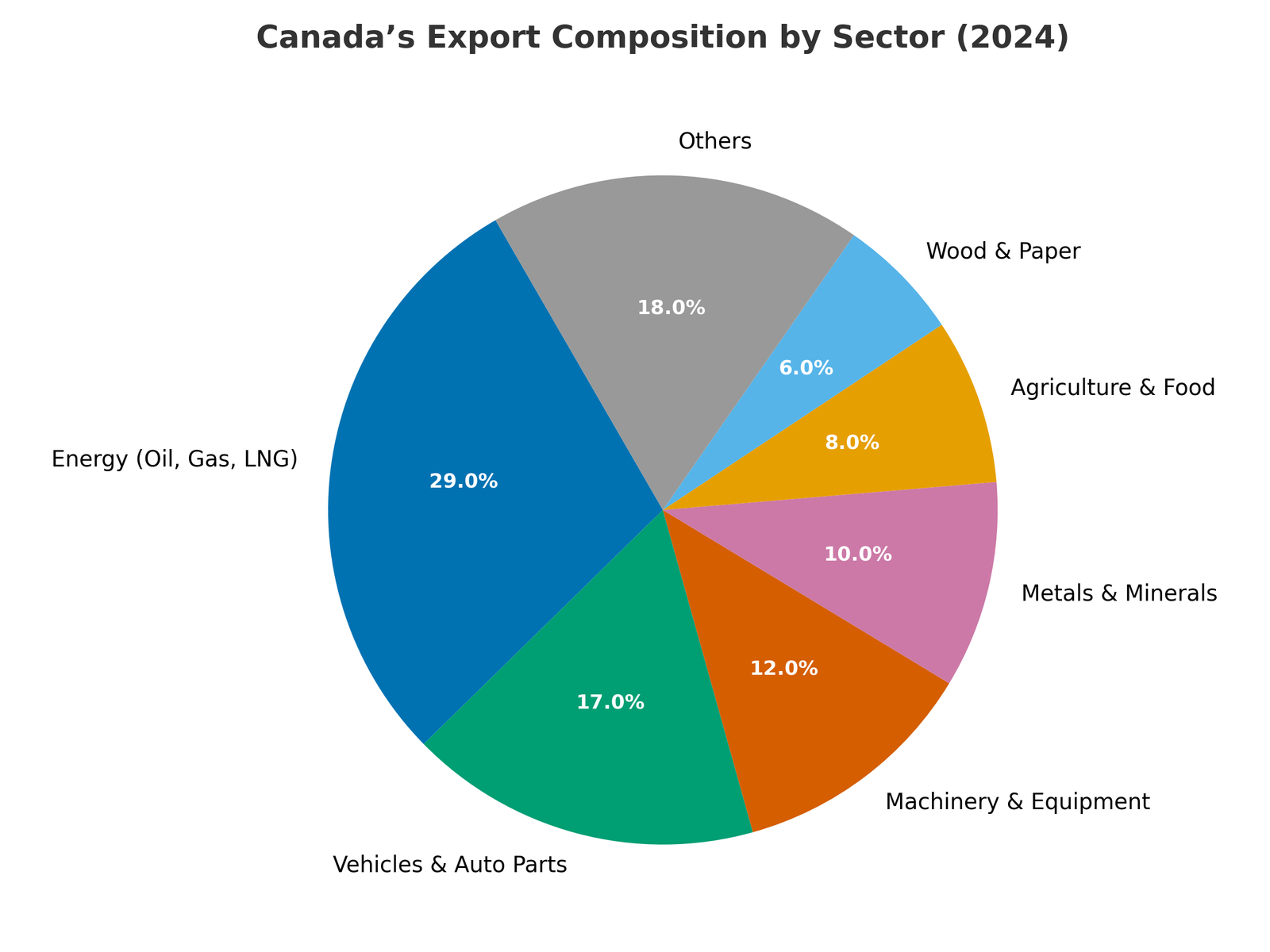
Canada’s export portfolio is a mix of energy, automotive, industrial machinery, and food commodities. The country’s natural resource strength, combined with advanced manufacturing, fuels its economic resilience.
➤ Crude Petroleum & Natural Gas – Core export commodities, shipped mainly to the US and Asian refineries.
➤ Vehicles & Auto Parts – Major shipments to the United States and Mexico, driven by North American production chains.
➤ Machinery & Equipment – Industrial and electrical equipment for global industries.
➤ Wood, Paper & Lumber Products – Forest exports to Asia and the US for construction and packaging.
➤ Agricultural Goods & Food Products – Grains, meat, and seafood dominate the agricultural trade segment.
➤ Minerals & Metals – Nickel, gold, and aluminum contribute heavily to the export value.
These sectors make Canada a key player in both raw material and advanced product exports, helping balance its global trade portfolio.
🔹 Key Market Trends in Canada’s Global Trade
➤ Energy Transition | Canada is diversifying exports beyond fossil fuels into renewable energy technology and low-emission fuels.
➤ Trade Diversification | Growing export demand from Asia and Europe reduces dependency on the U.S. market.
➤ Digital Trade & Automation | Increasing adoption of AI-driven logistics and paperless trade documentation.
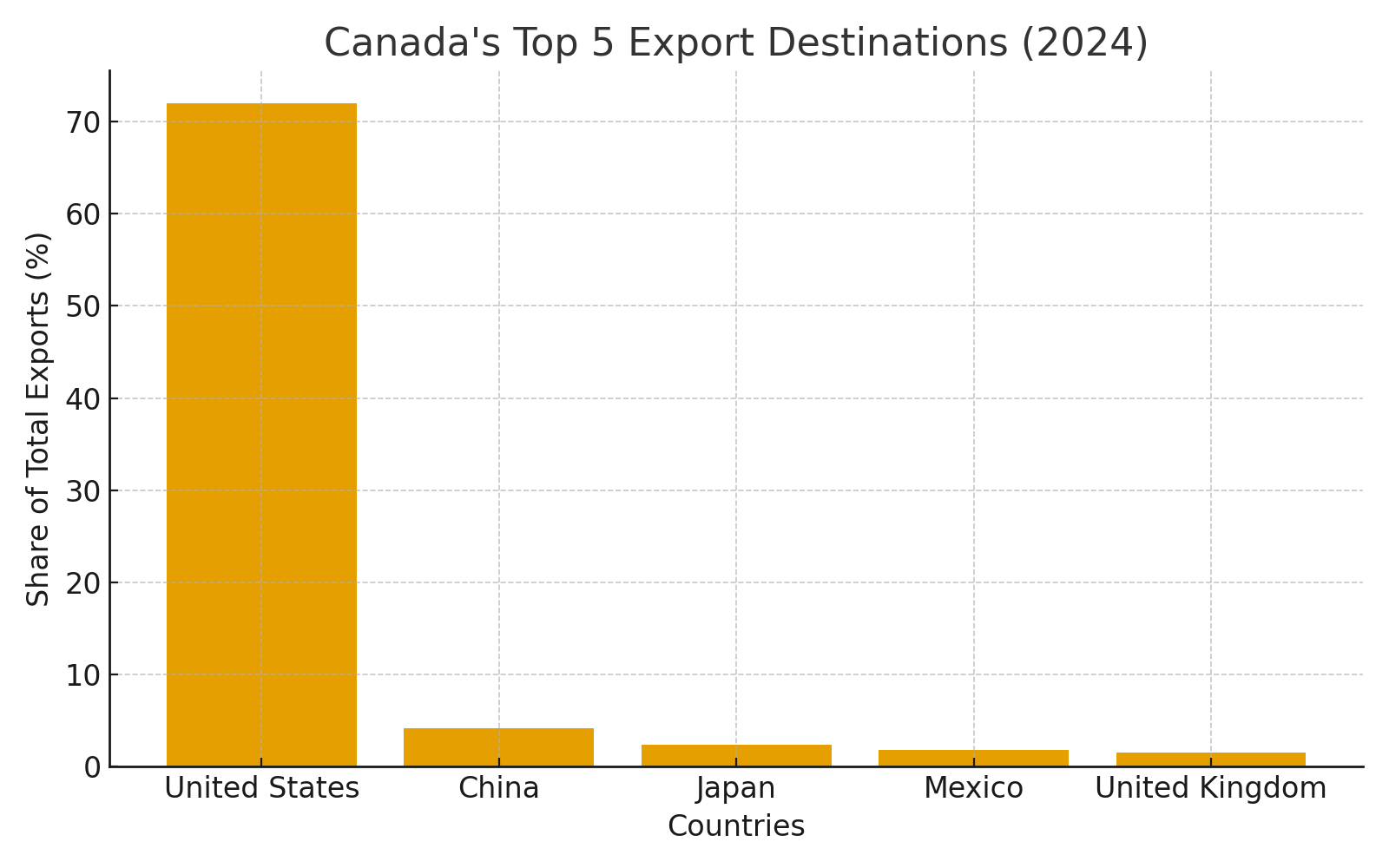
In 2024, Canada exported over USD 400 billion in goods to the United States, maintaining its top spot as the leading partner. However, trade with China, Japan, South Korea, and Germany has been rising, especially in agricultural and industrial sectors.
The second major trend is the expansion of agricultural and seafood exports to Asia, particularly Japan and South Korea, which have increased their imports of canola oil, seafood, and beef by double digits since 2022.
For real-time analytics and buyer data, exporters can connect with Exim Data Hub to access verified shipment trends and HS code insights.
🔹 Canada’s Top Export Destinations (2024–25)
| Destination | Share of Total Exports (%) |
|---|---|
| ➤ United States | 72% |
| ➤ China | 4.2% |
| ➤ Japan | 2.4% |
| ➤ Mexico | 1.8% |
| ➤ United Kingdom | 1.5% |
The United States continues to dominate due to strong energy and automotive supply chains.
Meanwhile, trade with China and Japan reflects rising demand for agricultural and resource-based goods, while Europe and Mexico provide growing opportunities for high-value manufactured exports.
🔹 Opportunities for Exporters
The global trade shift offers Canadian exporters several pathways for growth:
➤ Renewable Energy Exports – Demand for clean fuels, hydrogen, and battery materials is surging.
➤ Processed Food & Agriculture – High-value processed goods like canola oil and seafood are in global demand.
➤ Technology Partnerships – Collaboration in AI, logistics, and automation with Asian and EU partners.
➤ Green Certifications – Products with sustainability labeling are attracting premium buyers.
➤ Use Data Intelligence – Platforms like Exim Data Hub simplify buyer discovery and compliance tracking.
🔹 HS Codes for Canada’s Key Exports
➤ 27090000 – Crude Petroleum
➤ 87032300 – Motor Vehicles for Passenger Transport
➤ 10019000 – Wheat and Meslin
➤ 76011000 – Aluminum, Unwrought
Having accurate HS codes ensures smooth customs clearance and avoids costly delays. For customized HS classification, exporters can request sample datasets through Exim Data Hub or verify codes using the International Trade Centre’s Trade Map
🔹 How Exim Data Hub Helps Exporters
| Feature | Exporter Benefit |
|---|---|
| ➤ HS Code Intelligence | Accurate classification for pricing and compliance. |
| ➤ Buyer/Seller Insights | Verified contact details for importers worldwide. |
| ➤ Forecast Reports | Market projections and demand trends. |
| ➤ Compliance Tools | Stay updated with export documentation and shipment norms. |
Whether you’re new to global trade or managing large shipments, Exim Data Hub empowers exporters with real-time insights, data accuracy, and verified contacts across 100+ markets.
Visit EximDataHub.com to get tailored export support.
🔹 Conclusion
➤ Canada’s trade ecosystem continues to evolve, blending traditional exports like oil and vehicles with emerging sectors such as clean energy and processed food.
➤ Understanding export destinations, trends, and HS codes can help businesses make informed shipping decisions.
➤ With tools like Exim Data Hub, exporters can plan better, connect faster, and expand globally with confidence.
Want to export smarter? Use Exim Data Hub to stay ahead in global trade.
🔹 Frequently Asked Questions (FAQ)
Q1: Which country is Canada’s largest trading partner?
The United States remains Canada’s top trading partner, accounting for over 70% of total exports.
Q2: What are the top Canadian export categories?
Energy, vehicles, machinery, metals, and agricultural products lead the list.
Q3: How can Canadian exporters expand to new markets?
By using verified trade data, optimizing HS codes, and targeting fast-growing Asian and European economies.
Q4: How can Exim Data Hub assist exporters?
It provides HS code tools, verified buyer contacts, and predictive trade analytics to plan your next shipment effectively.